Blogs
Importance of Welding Turning Rolls
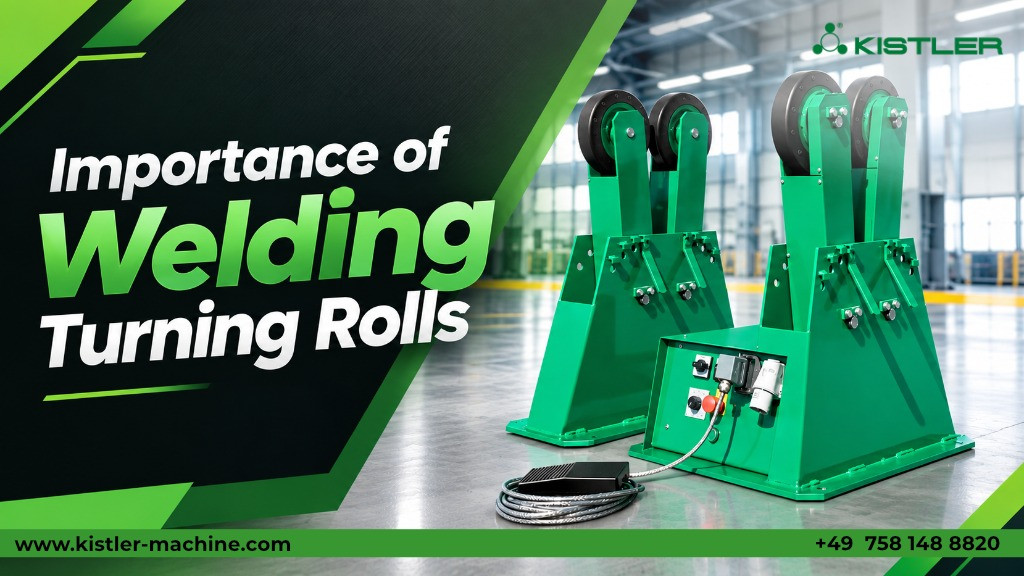
Welding turning rolls are mechanical devices that, using a rolling mechanism, offer rotation and repositioning of heavy cylindrical industrial parts that often transform into large storage tanks and pressure vessels. Handling the rotation manually can be time-consuming. The welding turning rolls system helps get rid of the manual rotation and positioning, making it one of the most used tools across industries.
What Are Welding Turning Rolls?
Industries require mass welding of heavy cylindrical objects on a daily basis. These parts need constant rotation and positioning to get the best welding efficiency possible. Handling these tasks manually can be tiresome and time-consuming. With welding turning rolls, the whole process becomes easier, faster, and more efficient.
These machines hold and rotate the cylindrical parts, such as pipes, tanks, and pressure vessels, while being welded on. No need for the operator to move around while welding; turning rolls can allow the parts to turn themselves and the welder to access all the parts of the component.
Generally, the main part of the welding turning rolls is the drive roll that does most of the rolling with the help of a motor, along with multiple idler rolls tasked with providing support to the weight and allowing free spinning. Both turning mechanisms together keep the component rotating smoothly throughout the welding process.
How It Works
The welding turning rolls offer a simple function. Firstly, the object is placed on top of the rolls. Then the drive roll is started, allowing the rollers to turn at a steady pace. During this, the welder is able to work on all the parts of the component without having to move around it. No need for manual rotation or adjustments. This is basically it. The speed and direction can be adjusted using the remote or control panel. This setup is compatible with mostly all welding types, including MIG, TIG, and submerged arc welding.
Types of Turning Rolls
There are multiple kinds of turning rolls; make sure to choose the one ideal for your requirements.
- Standard turning rolls
Standard turning rolls need to be manually adjusted in order to handle varying pipe or tank sizes; they are considered to be a good option for general rotating operations.
- Self-aligning turning rolls
Self-aligning turning rolls are ideal when the component sizes keep changing. They are able to automatically adjust to the size of the object.
- Anti-drift turning rolls
Like the name, anti-drift rollers are built to prevent components from the top of the rollers, meant to make the welding of longer workpieces easier and more efficient.
How It Helps in Operations
Turning rolls help retain output consistency throughout the welding process. When components are kept steadily, the job finishes quicker, without weak spots caused by frequent stoppage and initiation of the welding process.
It’s an ideal solution to save time and effort as well. Since its agile turning process provides easy access for the welder, he doesn’t have to move around a workpiece, allowing him to save time and increase productivity.
It also increases safety. Manual rotation and handling of large workpieces can be risky and injury-prone. Turning rolls just eliminate that risk altogether.
Constant centerline and power elevation rolls
These rollers help keep the components centered and height adjustable. They are mostly helpful in automated welding setups that handle high-volume industrial welding.
Applications
- Pipeline manufacturing
- Tank and pressure vessel fabrication
-Shipbuilding
-Energy sector projects
- General manufacturing
Conclusion
With welding turning rolls, the manual effort of rotating and positioning heavy cylindrical workpieces is obsolete. They allow smoother, faster, injury-free welding without putting strain on the welder’s body. These impressive machines come in different types and configurations, so before choosing one for your operations, talk to
Kistler Machines today.